.png)
Solid-Surface Shower Walls or Tile? Compare the Complete System
AI-generated comparison of solid-surface and tiled shower concepts; not HRD projects or installation diagrams.
Choosing shower walls is not just a question of color. Tile and solid-surface panels can both create a durable, attractive shower, but they organize the work differently—and they ask different things of the homeowner after installation.
For a Humboldt County bathroom remodel, the useful comparison is not simply “panel price versus tile price.” It is the complete installed system: substrate preparation, waterproofing, wall dimensions, penetrations, corners, seams, niches, trim, labor, maintenance, and repair options.
First, define what “solid surface” means
The term can be confusing. In this article, solid surface means a fabricated acrylic or acrylic-based sheet material intended by its manufacturer for shower or wet-wall use, such as certain systems offered by Corian, Everform, or Wilsonart. It does not mean every decorative wall panel sold for bathrooms, and it should not be confused with cultured marble, fiberglass surrounds, porcelain slabs, or laminate-faced panels.
Manufacturers describe these products differently. Corian markets fabricated shower walls and custom shower pans. Formica describes Everform Solid Surface Wet Walls as nonporous, water-resistant, repairable acrylic material that can be fabricated for bath and shower systems. Wilsonart also offers solid-surface shower surrounds, alongside a separate Wetwall panel product.
Before comparing bids, identify the exact product, thickness, approved substrate, adhesive, seam treatment, edge details, and warranty. Products that look similar in a photo may require different installation methods.
Tile offers the broadest design range
Tile can accommodate many colors, shapes, textures, layouts, borders, and niches. It can suit a small traditional bathroom, a detailed craftsman-style renovation, or a clean contemporary shower. Individual damaged tiles may sometimes be replaced if matching material is available and the underlying assembly is intact.
That design flexibility comes with more joints. The tile size and layout affect the number of grout lines, the visual scale of the room, the cuts around fixtures, and the labor needed to produce an orderly result. Small mosaics, patterned layouts, irregular materials, and multiple niches generally require more installation time than a straightforward large-format layout.
Most importantly, tile and grout should not be treated as the waterproof layer. Industry manufacturers explicitly state that tile and grout are not inherently waterproof. A tiled shower needs a properly designed water-management system behind or directly beneath the finish. Schluter’s shower guidance explains this distinction, and Laticrete’s waterproofing guidance describes sheet, liquid, board, and related membrane systems intended to protect the assembly beneath the tile.
The system must be carried through corners, penetrations, niches, benches, transitions, and the drain connection according to the chosen manufacturer’s instructions. Mixing isolated details from incompatible systems can complicate both performance and warranty coverage.
Solid-surface walls reduce the number of visible joints
Fabricated sheets cover much more wall area than individual tiles. Corners and panel connections can be joined or sealed using the specific system’s approved method, giving the shower a quieter appearance and fewer visible joints to maintain.
That can be appealing to homeowners who dislike scrubbing grout or want a consistent surface around the shower. Nonporous acrylic solid surface does not depend on a topical sealer for the face of the sheet, although joints, transitions, penetrations, and supporting construction still require correct detailing.
“Seamless” should be understood carefully. A fabricated installation may make some seams inconspicuous, but every shower still has transitions and penetrations that must be handled correctly. Sheet dimensions, access to the bathroom, wall geometry, window openings, niches, valves, grab bars, and the shower base all affect how the system can be fabricated and installed.
Maintenance is different—not absent
A tiled shower requires routine cleaning of the tile, grout, corners, and sealant joints. Grout type makes a difference, but even highly water-resistant grout does not replace the waterproofing system. Laticrete’s epoxy-grout guidance makes that point directly.
Solid-surface walls remove most grout lines, which can simplify regular cleaning. They are not maintenance-free. Soap film and mineral deposits still collect, sealant joints need inspection, and the homeowner must use cleaning methods approved for the selected finish.
One advantage of true solid-surface material is repairability. Minor scratches in some finishes can be renewed, while deeper damage may be professionally repaired. Corian’s use-and-care guidance also notes that dark or higher-sheen surfaces can show wear differently and may require professional refinishing for a uniform appearance. Product-specific instructions should control; do not assume one brand’s repair procedure applies to another.
Compare the complete installed scope
A meaningful comparison should put both options against the same shower design. Ask each proposal to identify:
demolition and disposal;
framing correction and wall preparation;
plumbing changes;
shower base or pan and drain connection;
the specified waterproofing or wet-wall assembly;
treatment of corners, penetrations, niches, and transitions;
finish material, fabrication, setting materials, adhesives, grout, and sealants;
trim, accessories, glass, and painting;
permit-related work when applicable;
warranty responsibilities; and
allowances or concealed conditions that are not included.
A sheet may cost more than an individual tile—or less than a premium tile—but material price alone does not predict installed cost. Tile labor varies greatly with layout and preparation. Solid-surface work depends on sheet yield, fabrication, transportation, access, and the number of cutouts and seams. Local availability also matters: a product that is difficult to source or requires a specialized fabricator may change the schedule and budget.
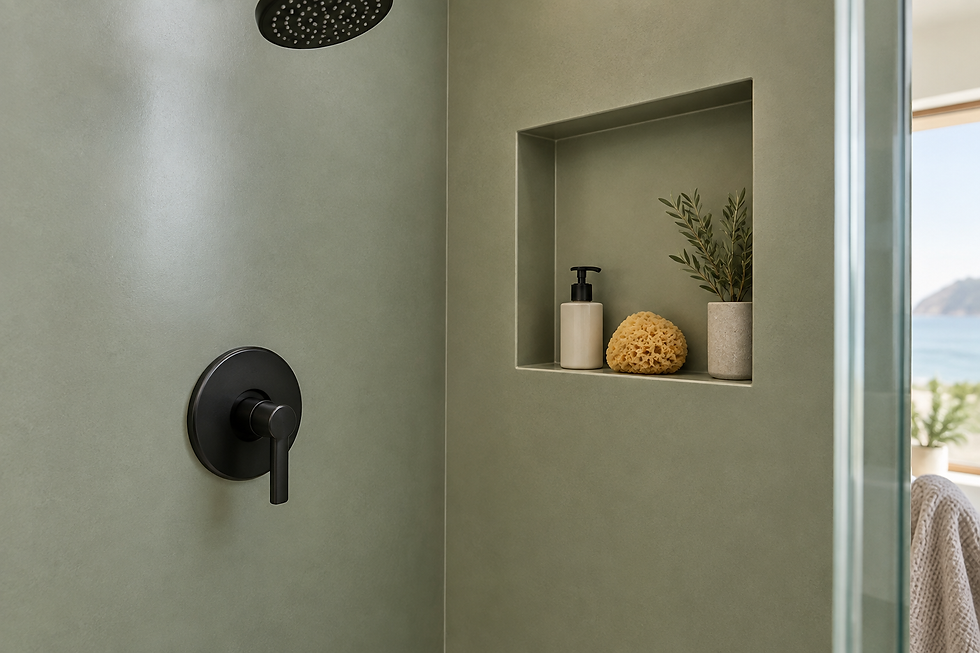
AI-generated solid-surface shower detail concept; not an installation diagram or completed HRD project.
Think about the room, not just the walls
The best wall finish still has to work with the shower base, glass, fixtures, ventilation, lighting, storage, and accessibility goals.
If future grab bars are possible, plan suitable backing before the walls are closed. If you want a niche, decide its size and location early. Confirm how its edges and waterproofing will be handled in the chosen system. Establish valve, showerhead, handheld, and accessory locations before fabrication or tile layout begins.
Samples should be viewed in the bathroom’s intended lighting. A large uninterrupted panel can make a strong color feel more prominent, while grout color and tile pattern can either calm or emphasize a tiled wall.
Which option is right for your bathroom?
Tile may be the better fit when design variety, pattern, texture, or a particular handcrafted appearance is the priority. Solid surface may be attractive when fewer visible joints, straightforward daily cleaning, and a quieter continuous finish matter more.
Neither choice compensates for poor preparation or incomplete water management. The more useful question is: Which complete system best fits the room, the homeowner’s maintenance preferences, the available products and installers, and the project budget?
Humboldt Renovation and Design can help evaluate the existing bathroom, compare complete scopes, and coordinate the finish with the construction behind it. Contact HRD to discuss your bathroom renovation.
Product information checked September 9, 2026. Availability, specifications, approved uses, installation instructions, and warranties can change; verify the selected manufacturer’s current documents for the exact product.
Comments